I picked up this model from David Allen’s Getting Things Done book and the variation of the picture here is something I’ve doodled countless times in my journals as this has become the model for how I approach planning and reflecting on life and things.
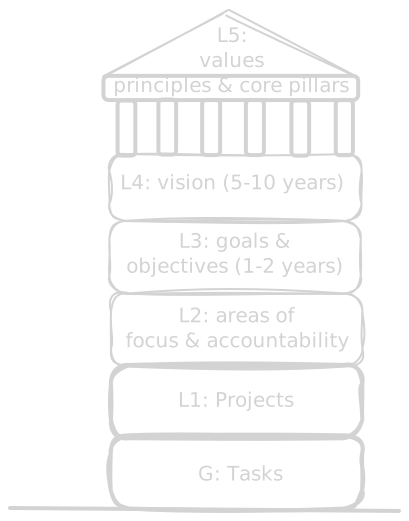
NOTE: It uses UK-style floor numbering system where first floor is actually the second one. I’m not quite sure why I (nor all people in UK) did it that way.
G: Tasks
Review Frequency: Daily
I use a combination of a bullet journal and physical 3x5 paper cards that I buy in bulk from Amazon to keep track of all the things professionally and personally I need (or want) to do in the immediate future
L1: Projects
Review Frequency: Weekly
In accordance with GTD methodology, I keep a stack of 3x5 cards project that I generally cycle through every 1-2 weeks. A project is anything that takes a long time to get done and/or requires multiple steps/tasks.
In the review, for each project the question: do I know what I’m doing next for this project? This, then feeds back into tasks.
L2: Areas of Focus & Accountability
Review Frequency: Don’t have one
This is the one layer in the model where my discipline is relatively loose. In theory this is where you identify all the hats you get to wear (i.e. roles and responsibilities). The idea (from the GTD model) would be to periodically review each one to bring into intentionality into how well you fulfill each of those hats and if any of them need more attention/energy dedicated to it.
L3: Goals & Objectives (1-2 years)
Review Frequency: Few times a year
The traditional GTD system suggests that once you have a vision, you identify shorter-term goals to move yourself toward it (“short” being a relative term).
As I mention below, I’ve struggled to define a grand vision for myself. I eventually got there, but I’ve found that using my core pillars also provides a good jumping-off point in thinking through the goals and objectives I want to pursue.
I’ve also written about my recent victories using AI to make the goal-setting exercise slightly less excruciating.
L4: Vision (5-10 years)
Review Frequency: Don’t know
Where do you see yourself in 5-10 years? Can you close your eyes and paint that picture? Or how about just put down some broad brush strokes? Or just jot down some ideas??
I’ve struggled with this one for years. Where do I see myself in… yeah… no fucking clue. At some point I really drove myself batty attempting to figure out why I don’t have a vision and trying to squeeze one out of my skull by force.
Eventually I did come up with one but it was one hell of a struggle and it took advances in technology to help me finally get there. Since then I reviewed it once and yeah, it looked good 🙂
L5: Values, Principles & Core Pillars
Review Frequency: Surprisingly Often
Rather than being part of a plan along a time axis, this level is intended to identify who you are. It is the north star for the rest of the system.
NOTE: In doing my own research, I feel like there’s no clear, well-established disambiguation between values and principles. Some authors, almost use the terms interchangeably. However, in the way I use these terms, there’s a very clear distinction between the two.
In my personal system, I made a bit of a deviation from pure GTD. In addition to values and principles, I also include a set of core focus areas. While David Allen might argue those belong in L2: Areas of Focus, I make a strict distinction between the maintenance role hats one has to wear day-to-day vs. meaning-making domains. For me, these domains are essentially load-bearing pillars. If one collapses, the whole roof may come crashing down.